
How to arrange sorties for YH-3000 multi-point close-up observation
There are often multiple locations at the rescue scene that require additional viewing, but their urgency and distance vary.
There are often multiple locations at the rescue scene that require additional viewing, but their urgency and distance vary. For multi-rotor missions, you can first list the questions into a list of points: what images need to be confirmed, whether there is a suitable take-off and landing area nearby, and whether ground personnel can directly verify it. Scheduling sorties by problem rather than by points on the map can reduce aimless round trips.
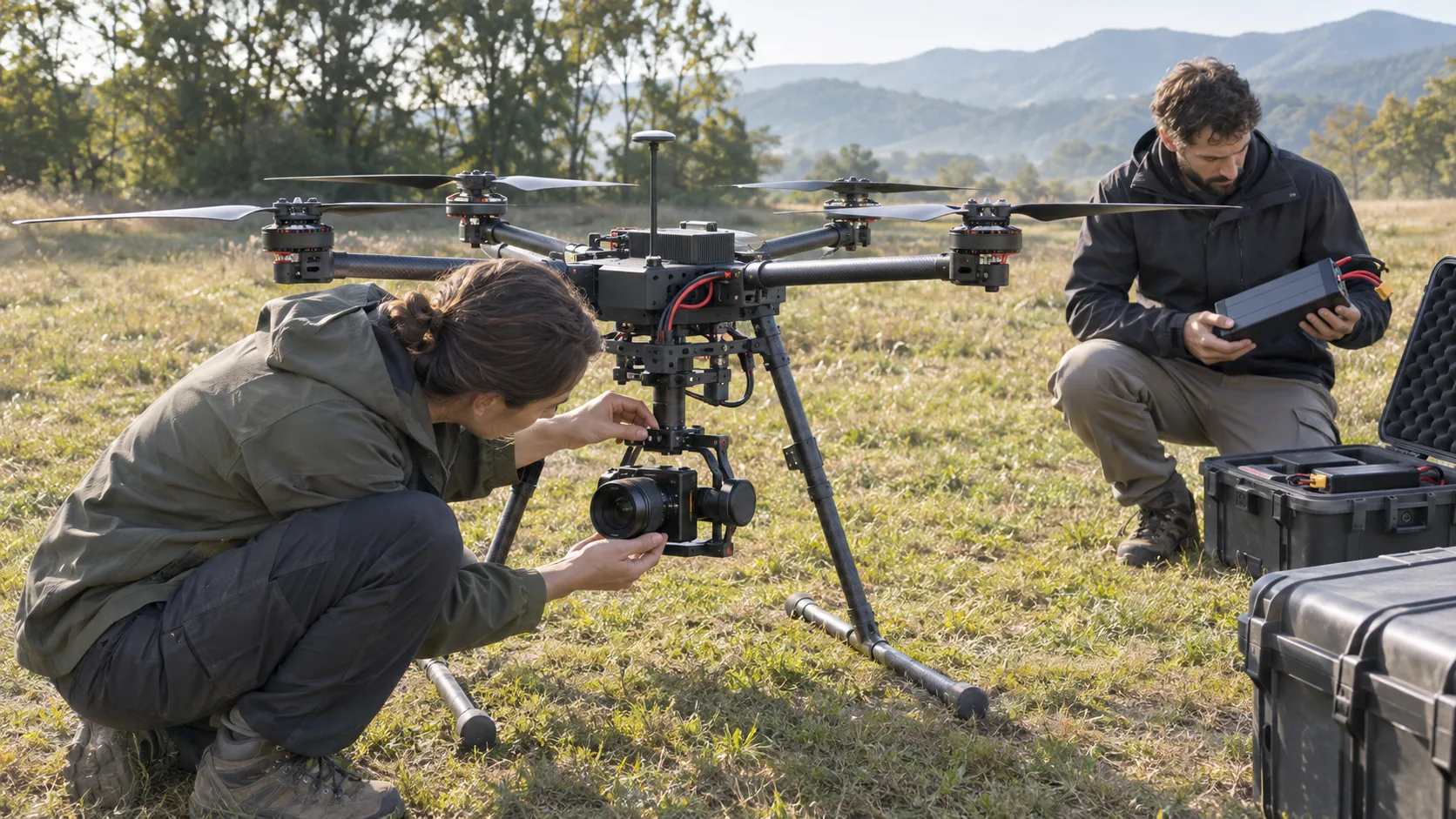
The loading time of YH-3000 is directly related to the weight: about 30 minutes for a 30 kg load, about 18 minutes for a 60 kg load; about 55 minutes for no-load endurance. After selecting cameras and other equipment, first calculate the time required for takeoff, arrival, observation, transition and return, and then decide how many points the flight will cover. No-load numbers cannot be used to schedule heavy-load missions.
Adjacent points can be combined according to distance and priority, but if a certain point requires longer observation, it should be arranged separately to avoid rushing to shoot subsequent points. For each point, at least retain a panoramic view that can be positioned and a partial picture that answers the question; if it is affected by obstacles, smoke, dust or light, write down why it cannot be judged, and propose the perspective needed next time.
Load selection also involves power supply, installation interfaces, equipment fixation and data return. Just because the platform can carry a certain weight does not mean that any device can be installed directly. The trial mission should verify the image stability and actual working time under the target configuration, and let the person in charge on site confirm whether the image is sufficient to support the next step of ground verification.
After the flight, organize the original images, screenshots and unconfirmed items according to the point number, and then fill in the list with the review status. If the same position has been verified by ground personnel, the next sortie can be adjusted to deal with the new problem. The value of the YH-3000 lies in providing usable close-up views of specific points, and sortie scheduling should always be subject to clear questions and actual load times.